Mention Hilversum, and people of a certain age will probably think of the radio. That was my first encounter with the place, listed alongside Luxembourg, Sottens, the BBC and others on the dial of my grandparents’ old radio set. Hilversum was, and remains, the centre of the Dutch national broadcasting system and that is surely its main claim to fame – as the author Charlie Connelly remarked in Last Train to Hilversum, his love letter to radio: “It’s a curious location on the face of it, as if the BBC and all the major commercial broadcasters in Britain were huddled together on an industrial estate on the outskirts of St Albans”.[1]
But as I grew an interest in all things municipal, it was Hilversum’s town hall, designed by Willem Marinus Dudok and opened in 1931, that became something of an obsession for me. I just felt the imposing structure was beautiful and everything a civic centre should be. This modernist design (although at the time, some of Dudok’s critics questioned just how modernist it actually was) struck a chord somewhere and somehow. On the subject of striking things, the town hall’s bells – unsurprisingly given their location – were heard each hour on Dutch radio for many years [2].
I was determined to make a pilgrimage, but it was one of those trips that never quite seemed to happen. But, we finally got our act together and undertook the long drive from south London to Hilversum in April 2025. I sit here a year later finally writing this post and sharing my photos of the day we toured the town hall.
Dudok and Hilversum Town Hall
In their 1995 book Town Hall, Hilversum, W.M. Dudok, Herman van Bergeijk and Paul Meurs give a comprehensive overview of the development and execution of the Town Hall in the 1920s and 30s, together with an account of its full restoration and renovation between 1989 and 1995 [3].
Dudok had been appointed Director of Public Works for the Hilversum municipality in 1915 and a new town hall was an urgent priority. The favoured location was on Kerkbrink, a site on the western side of Hilversum’s shopping district, which would have made the building an integral feature of the town centre, and Dudok produced a number of designs with this location in mind.
Financial problems caused the whole process to be delayed and the passage of time allowed for much deliberation, discussion and disagreement over designs and locations. A further site on ‘s-Gravelandseweg, the main north-westerly route out of the town, was identified on land belonging to a solicitor, Albertus Perk, although he would ultimately prove unwilling to sell up. In their survey of Dudok’s work, Annette Koenders and Arie Den Dikken [4] suggest that Dudok also considered a location on the Langgewenst, an area just to the north of the central shopping district. But eventually, in 1923, the municipality purchased the Witten Hull estate, close to ‘s-Gravelandseweg, which provided a parkland setting and gave Dudok more space to play with, compared to the fairly cramped Kerkbrink.
Dudok appears to have patiently gone along with all of this, diligently producing designs for the various bits of land that were in contention. Kerkbrink had presented an opportunity to improve what was then a rather unattractive urban square in a prominent location. Witten Hull was a different proposition altogether, which allowed Dudok to emphasise Hilversum’s “garden village” character. Dudok’s final plans, which were the ones ultimately executed, were approved by the Council in November 1924. The municipality’s financial pressures had not abated though, and work did not start until 1928. The building was completed in 1931.
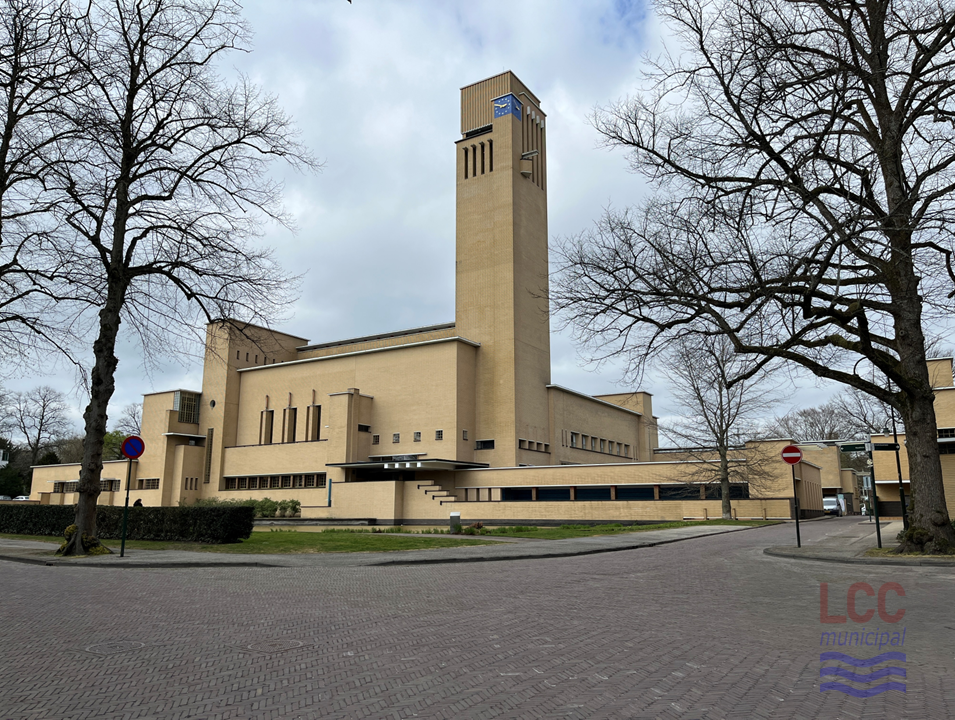
Dudok’s design comprised a series of cuboid structures arranged asymmetrically in specially-commissioned elongated yellow bricks, dominated by the tall campanile. Reading across the various authors who have described the design, numerous influences are evident: the abstraction of the Dutch De Stijl movement, an emphasis on brick from the Amsterdam School, European Expressionism, and, as our tour guide pointed out more than once, the Prairie School work of Frank Lloyd Wright.
Van Bergeijk quotes Dudok directly on the architecture:
“I have attempted to attain the monumentality appropriate for a town hall, but at the same time preserve a rural character….the rural character is expressed here, in my view, through the building gradually ascending above its setting and through the intimate interweaving of garden and structure, the severity of which needs the contrast of a luxuriant garden [5]….No lavish detailing, but lavish volume effects and a grand presence will be the hallmarks of this structure”. [6]
While not without its critics, the building appears to have been warmly received for the most part. It became part of the fabric of the town and a celebrated local, and national, landmark. But by the 1980s, it was clearly in a poor state of repair. Paul Meurs’ chapter of his book with van Bergeijk focuses on the restoration work which took place over a six year period from 1989. As with the original construction, money proved to be a major problem (Hilversum Council was effectively in special measures as a so-called “Article 12 Council” [7]) and Meurs documents the endless negotiations with central government and other public bodies to get the 32 million guilders required to fund the works.
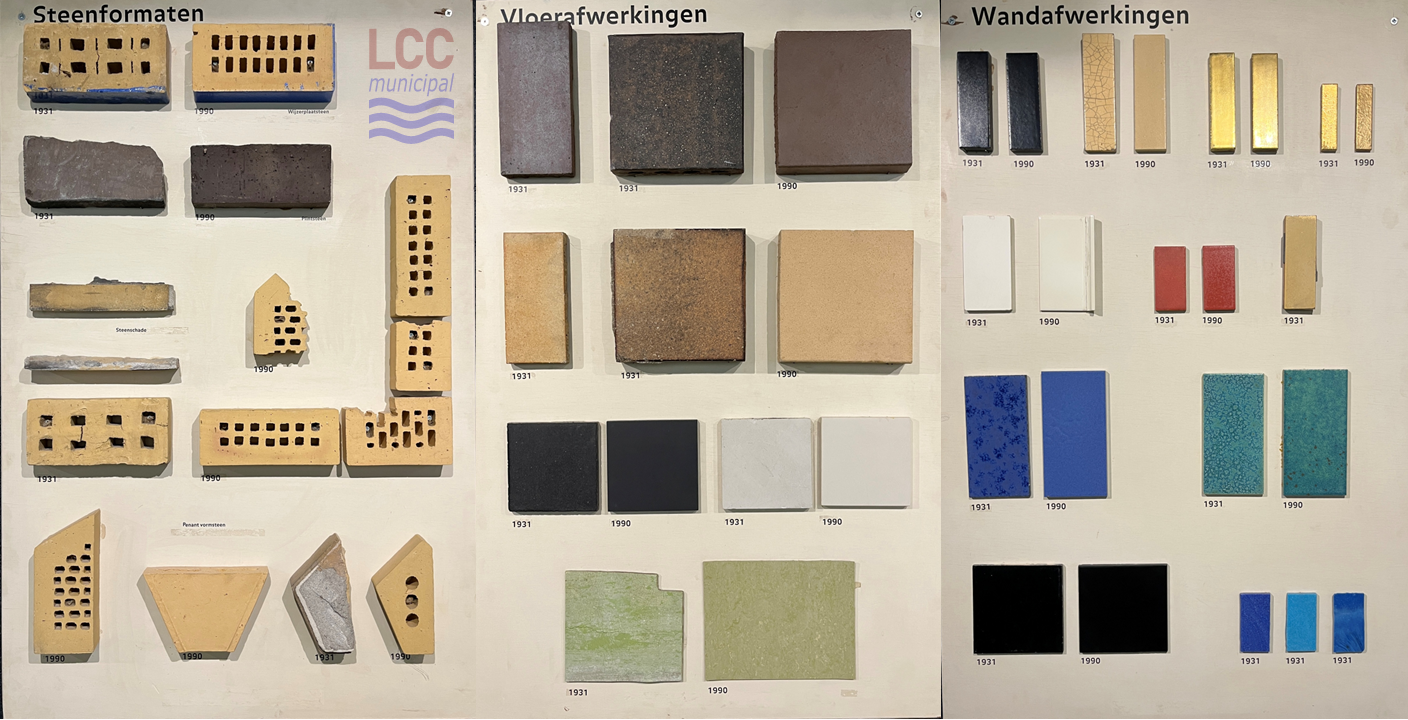
The issues were as monumental as the building itself – most of the bricks had failed through frost damage, water ingress was a problem as the cast iron rainwater pipes embedded in the brickwork had corroded, the concrete was decaying and many of the steel window frames needed replacing, as did a lot of the tile work. The top 14 metres of the bell tower were completely replaced [8]. Within the town hall, we saw an interesting display of some of the “before” and “after” materials, which is presented in the photograph below.
The project successfully concluded in 1995 with much of its fabric brand new.
Visiting the Town Hall
So, to my April 2025 visit…
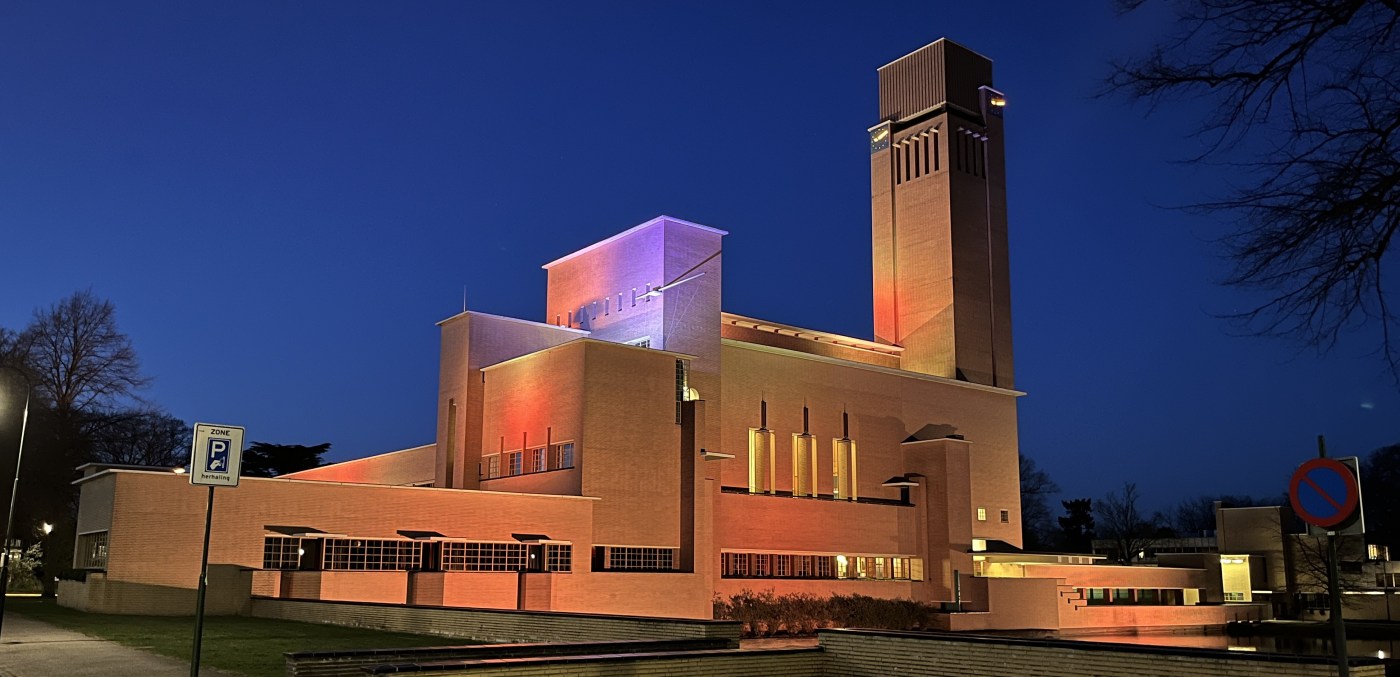
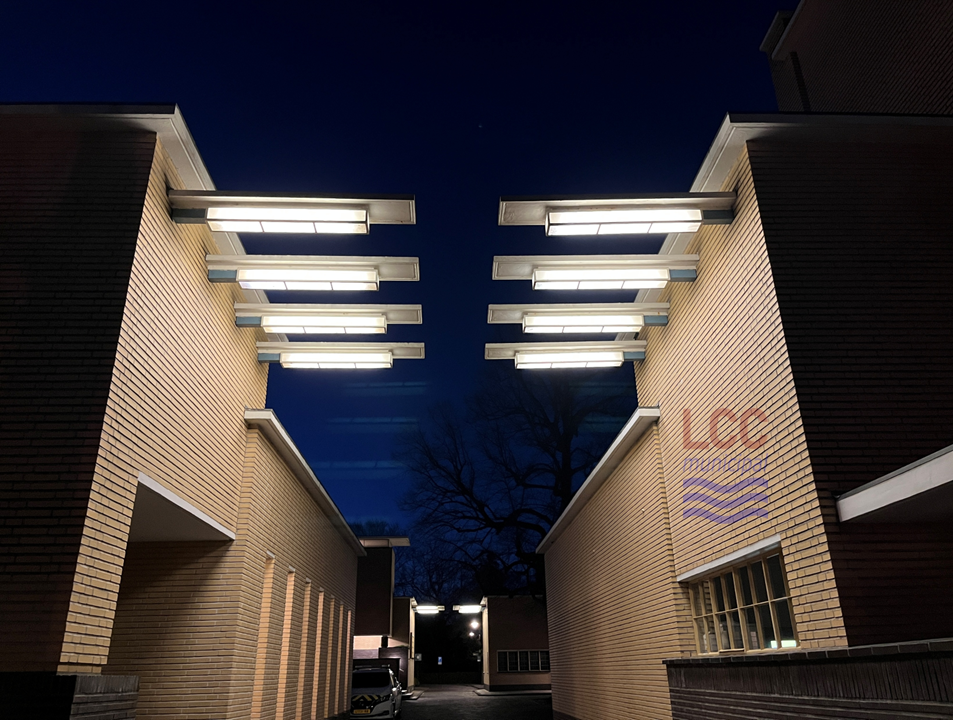
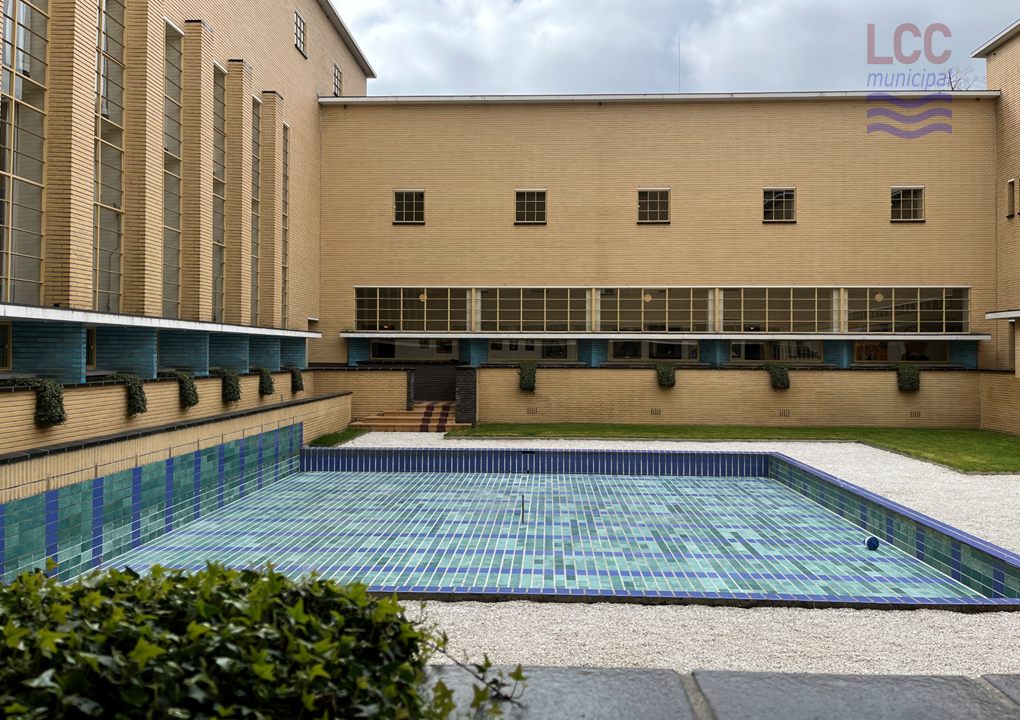
I first experienced the building at nighttime, when it was bathed in shades of red, orange and purple, the shadows created by the illumination serving to emphasise the linear nature of the town hall’s different components (in the picture below, see the contrast between the brightly-lit left hand face of the campanile and the shaded right hand face). The building presents itself in different ways as you walk round it. From the front, looking across the large rectangular pond, it does appear monumental (the mayor of the time describing the design as fort-like), but the effect is softened from the rear and westerly side.
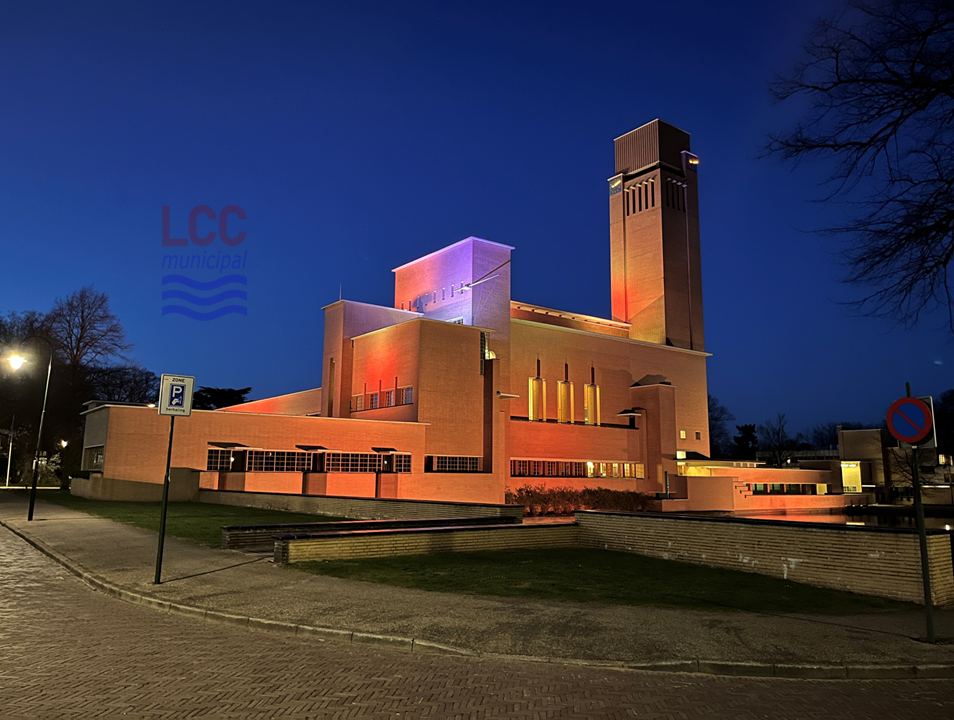
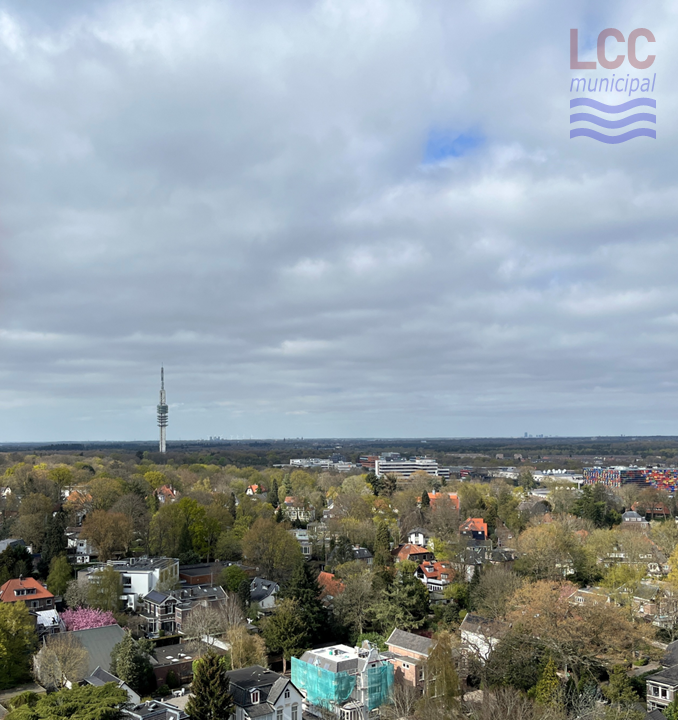
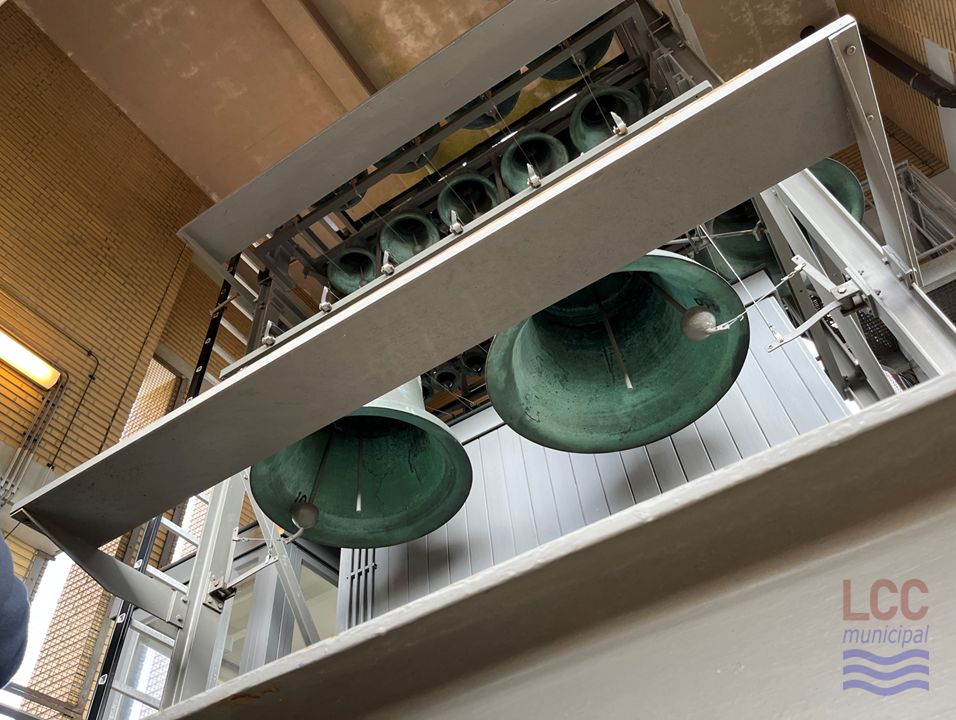
I present below my photos from the guided tour of the interior, which included a rather alarming ascent to the very top of the bell tower. In the final stretch we were required to cling on to a near-vertical steel stepped ladder, the handrail of which was freezing cold having been exposed to the chilly April air. To one side, seemingly within touching distance, was the array of bells. It was one minute to the hour. Only then did our guide tell us that they are switched off during tours, otherwise that would have been the end for me and you wouldn’t be reading this now.
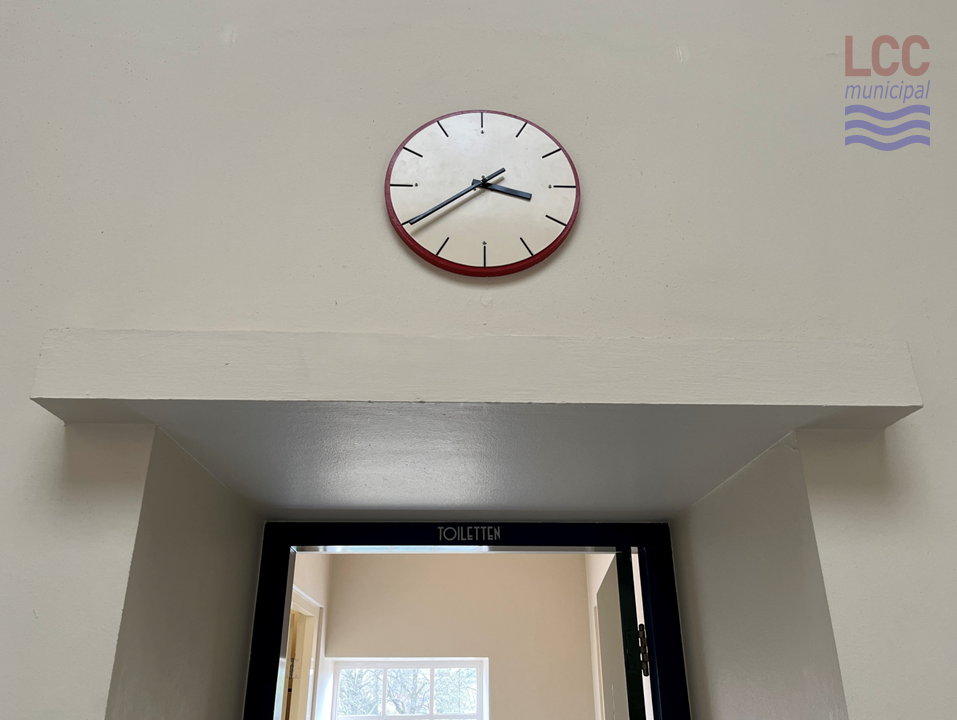
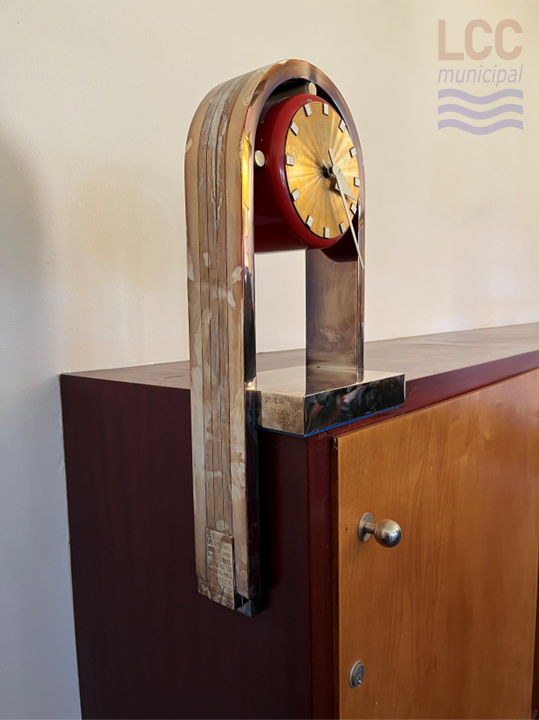
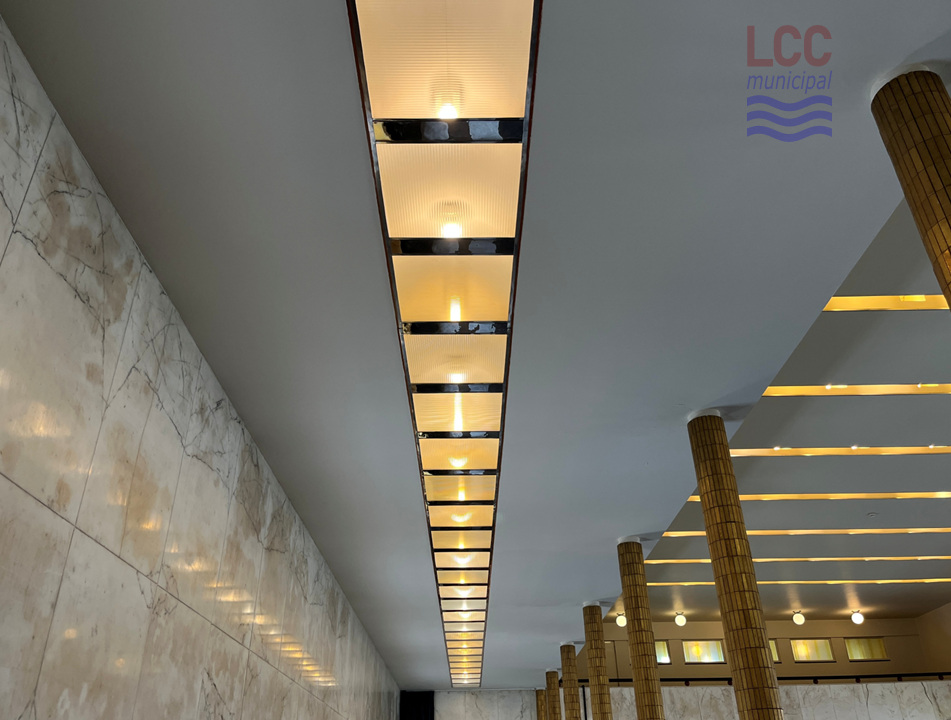
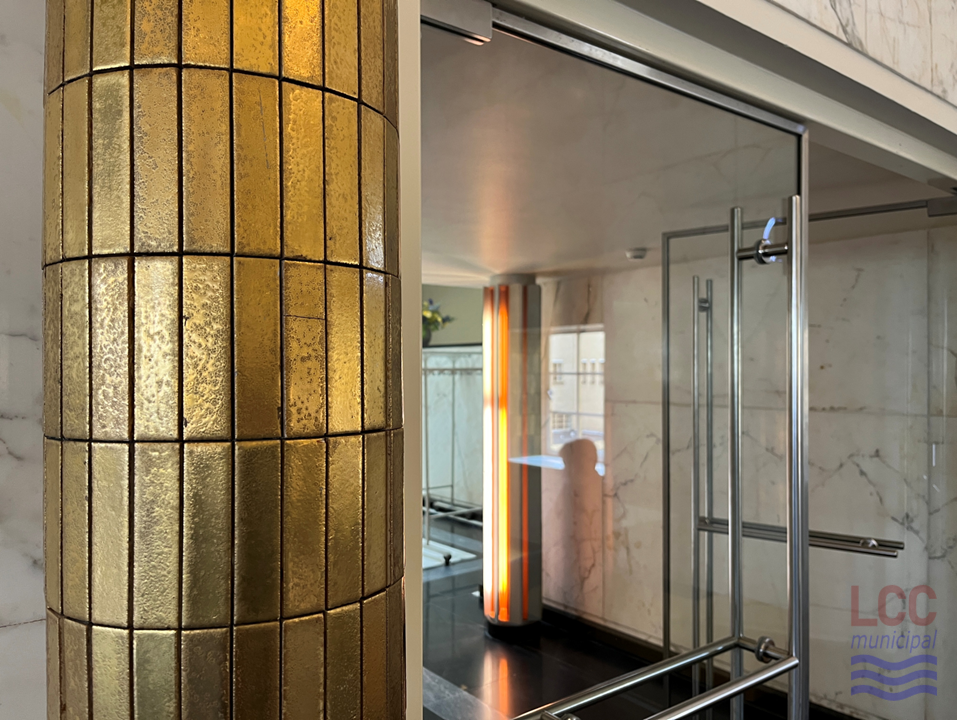
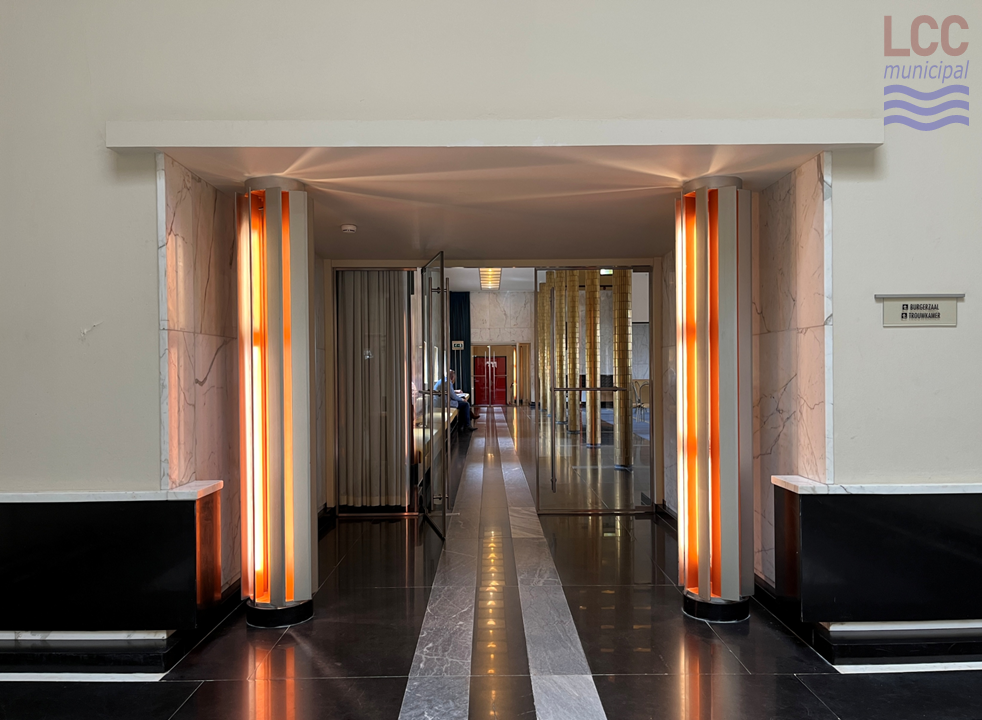
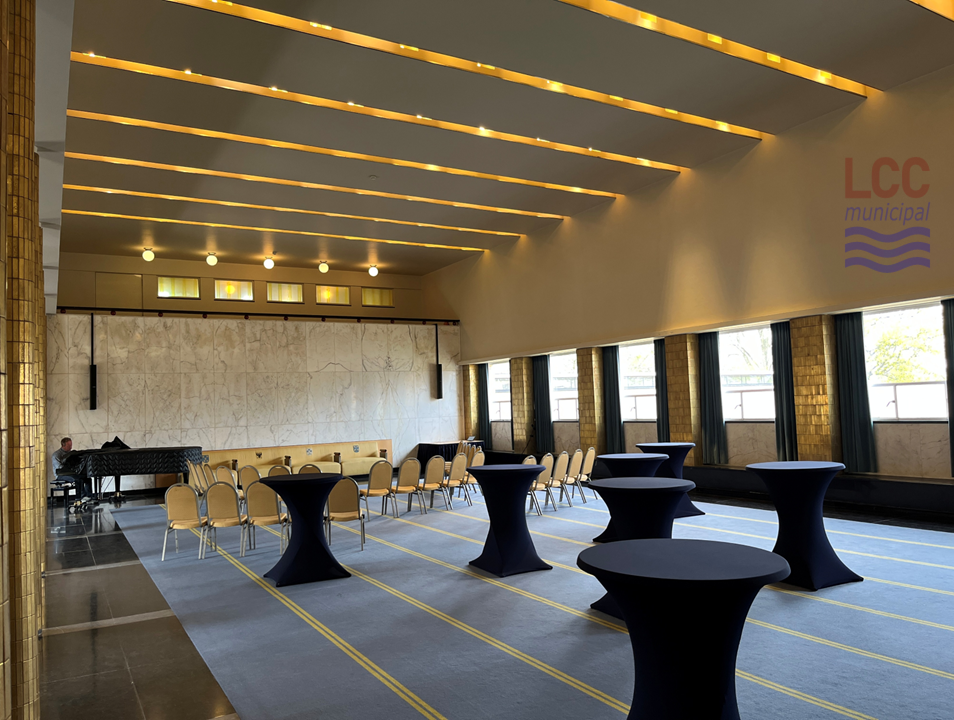
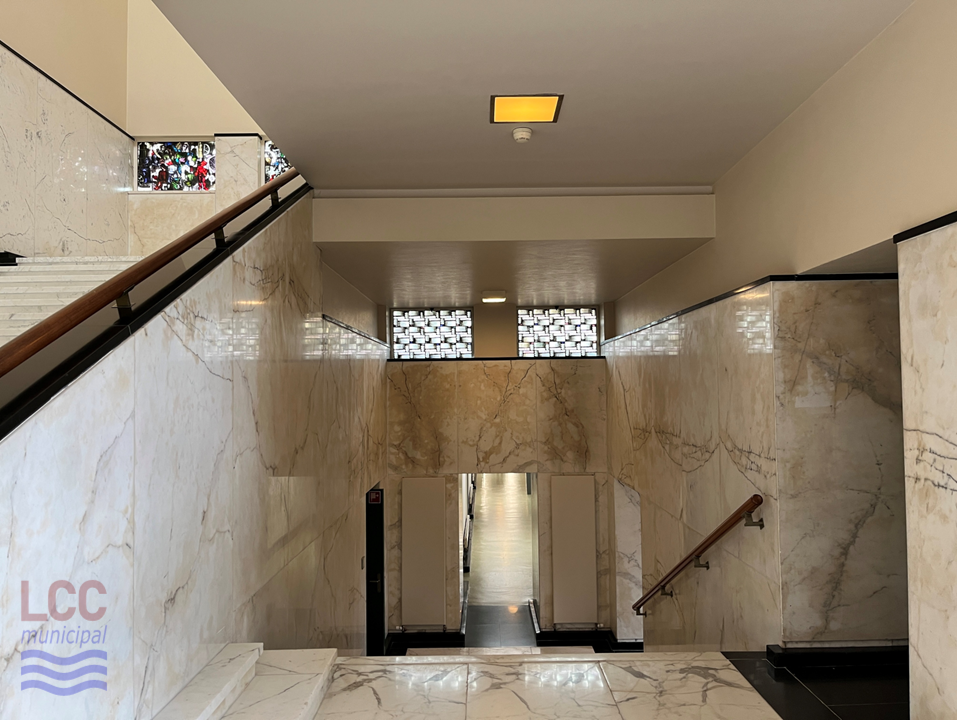
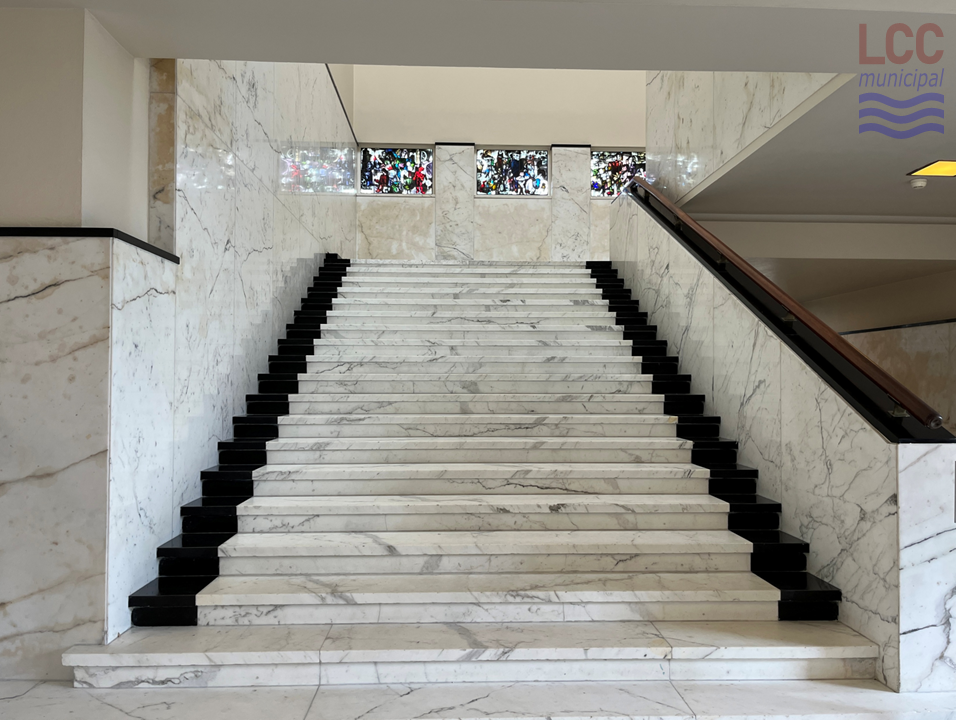
Dudok paid close attention to all of the detailing – inside and out – and I hope the photos give you a sense of the beauty of the interior design.
Post continues after photos.
The exterior
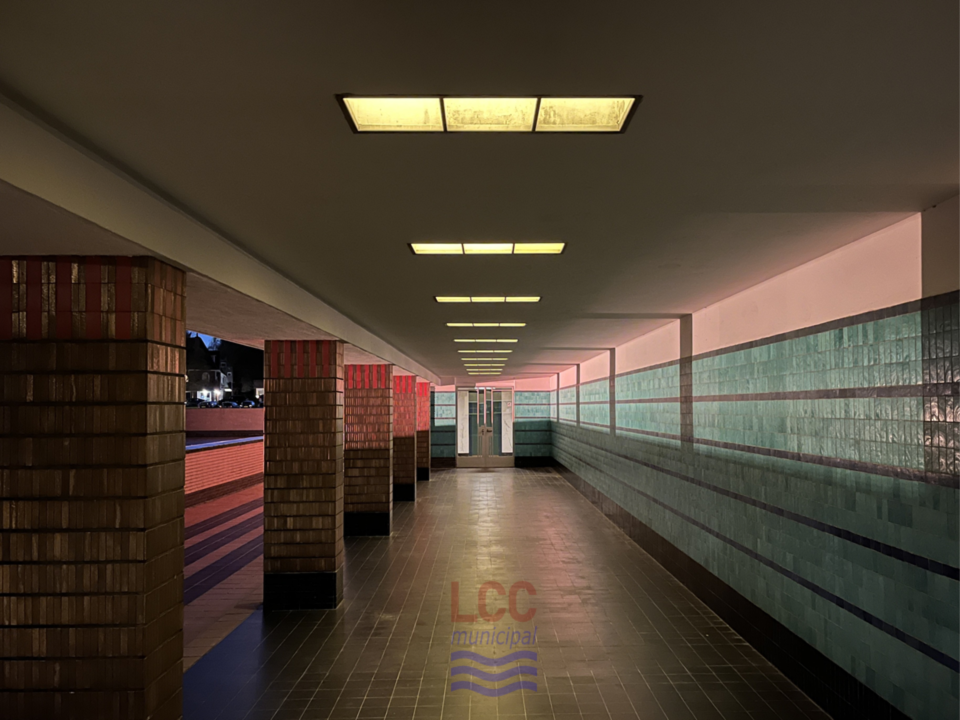
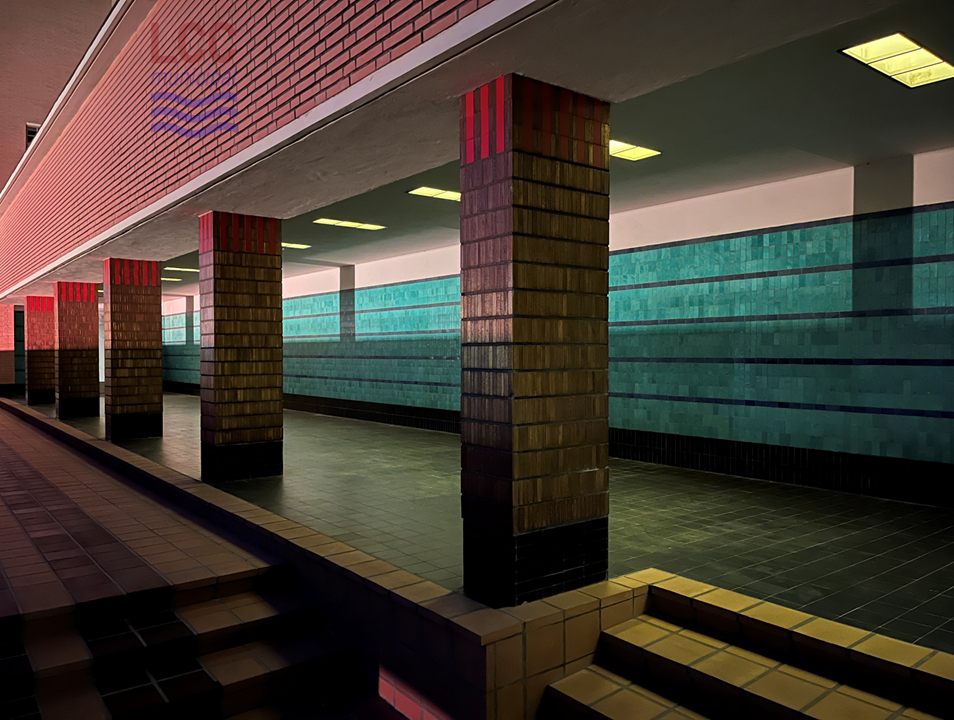
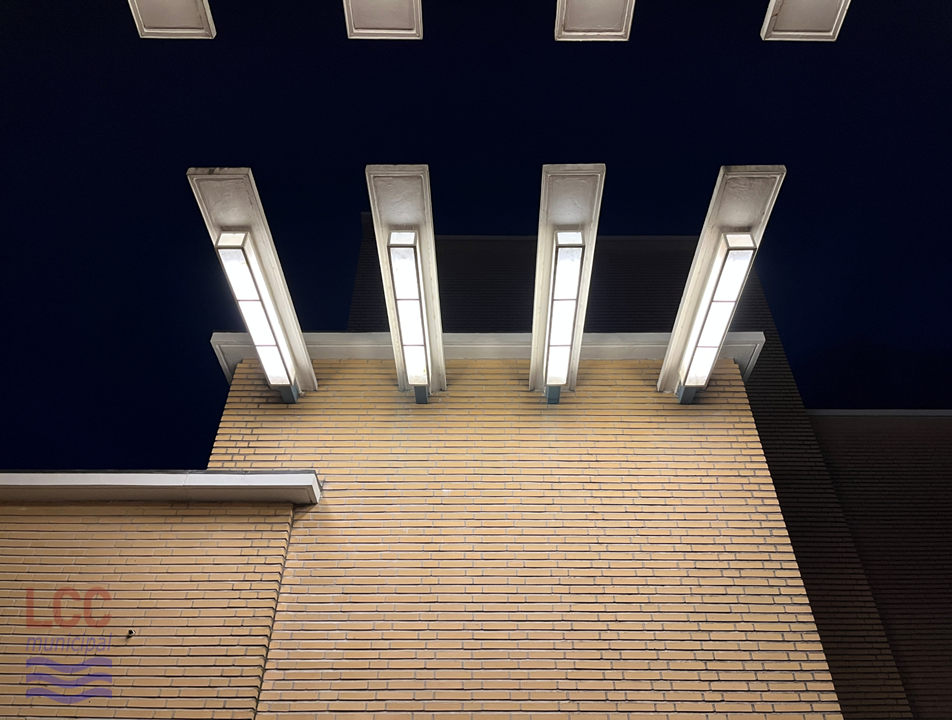
Interior scenes
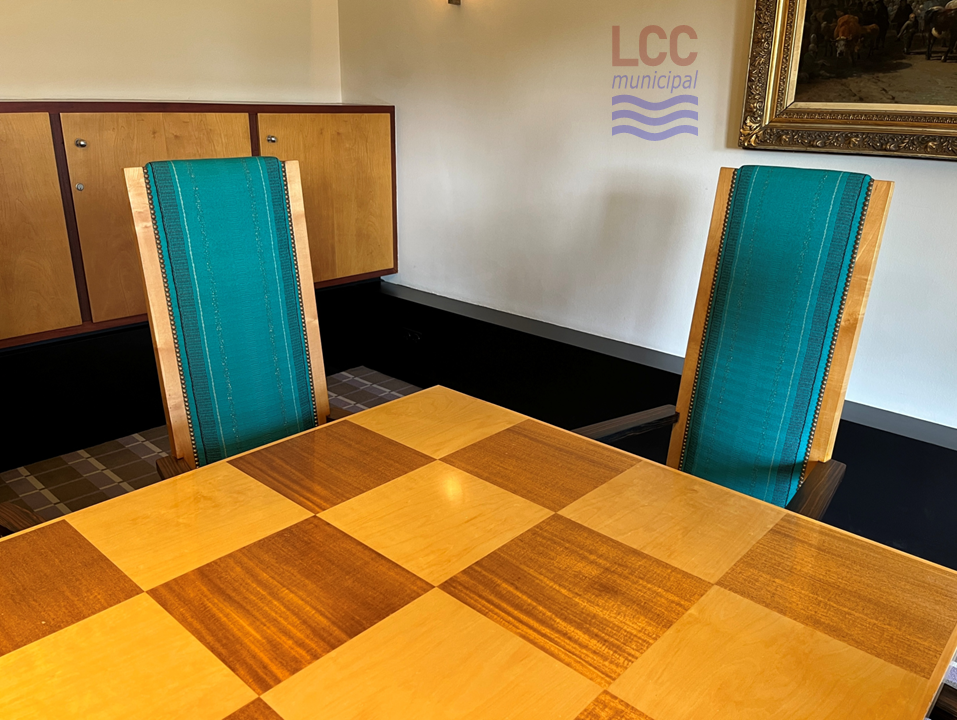
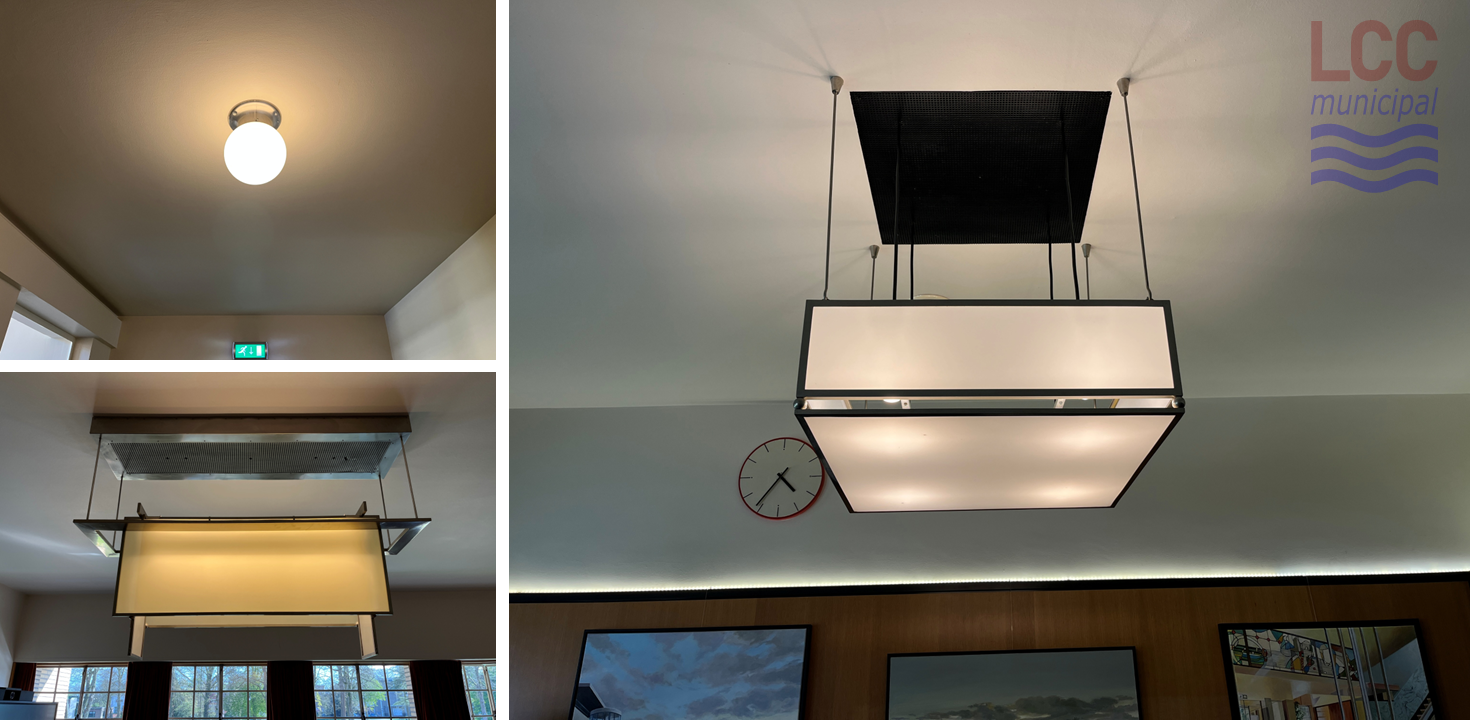
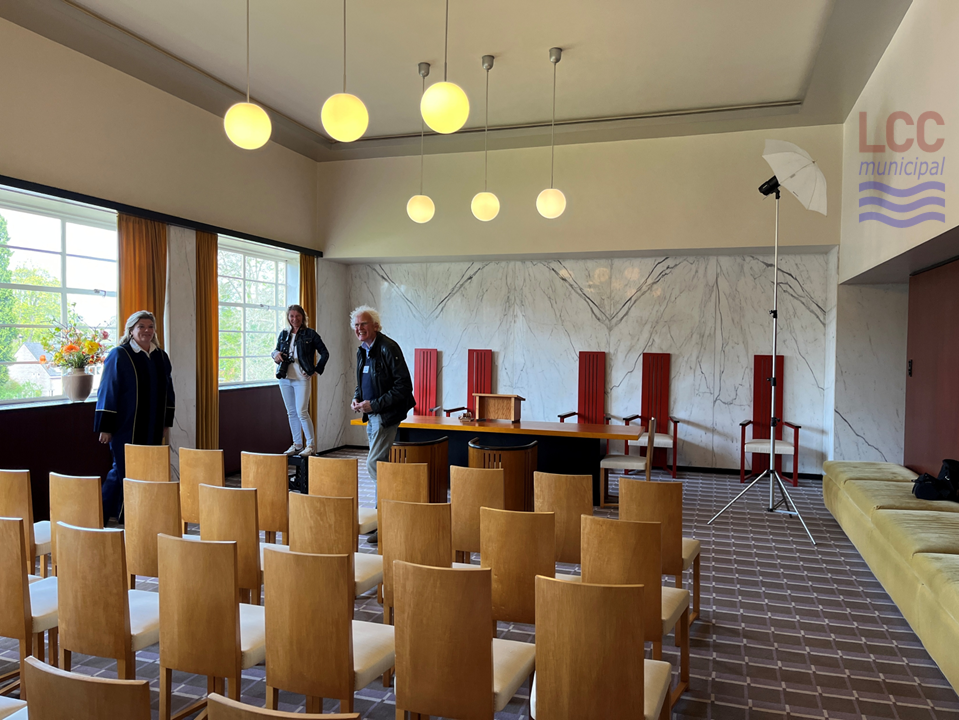
The Council Chamber
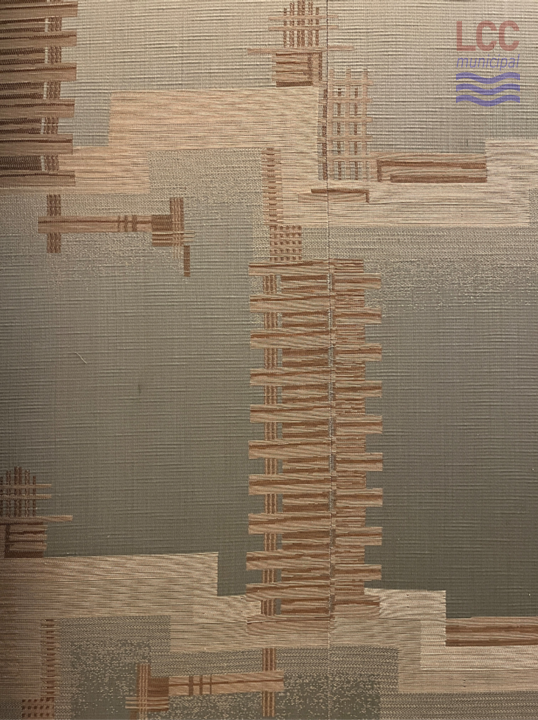
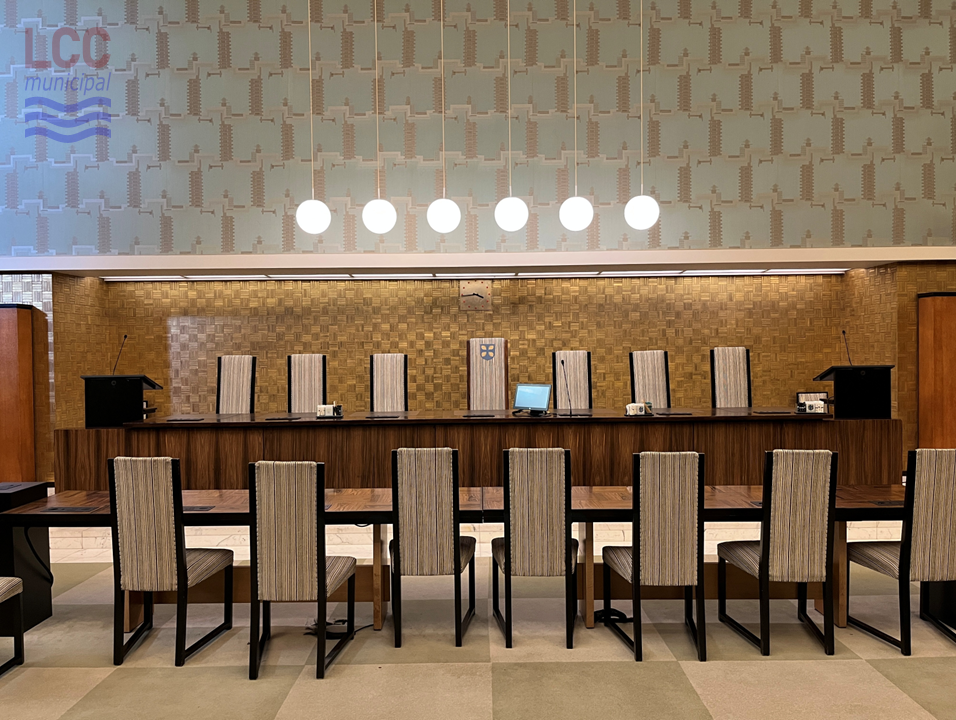
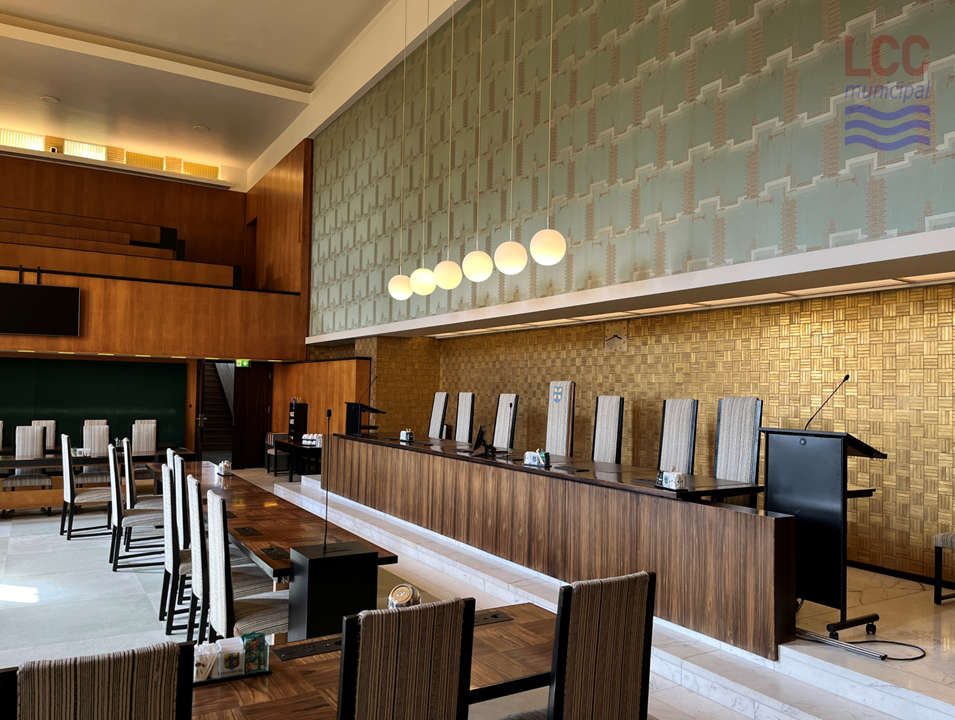
The Assembly Hall
The main staircase
The bell tower
Dudok and Hilversum: legacies
In the depths of the town hall was an exhibition looking at the global influence of Dudok’s architecture, a companion piece to Inspired by Dudok, a fascinating publication by Joke Reichardt and Peter Veenendaal [9], the devoted curators of dudok.org.
From the Hotel des Galeries in Jakarta, to the Kikkawa House in Tokyo, via the Lincoln High School in Dallas, the case can be made that Dudok’s influence spread far and wide. For the UK, the basement display focused on Burnet, Tait and Lorne’s Curzon Cinema (Mayfair) and Masonic Hospital (Hammersmith), Charles Holden’s Piccadilly line stations of the 1930s, and various colliery buildings and pit head baths.
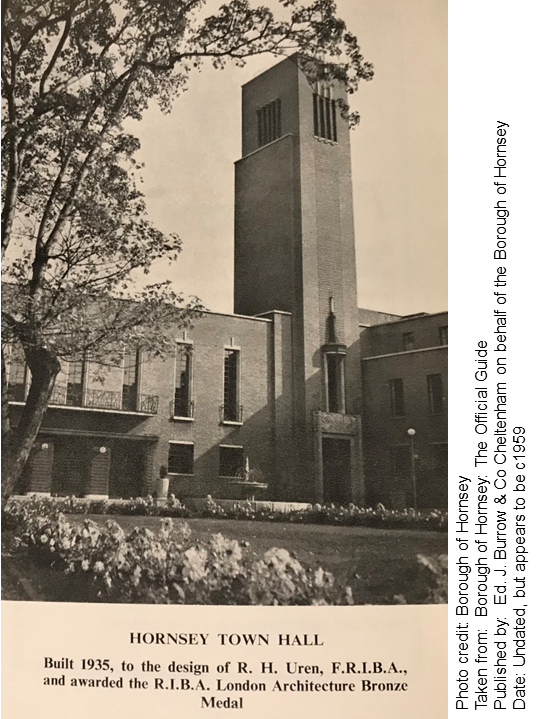
UK municipal buildings were absent from the exhibition (but not the book), as far as I could see. Perhaps the obvious candidates, though, are the former town halls at Greenwich and Hornsey, on account of their tall campanile clock towers which were very clearly influenced by Hilversum.
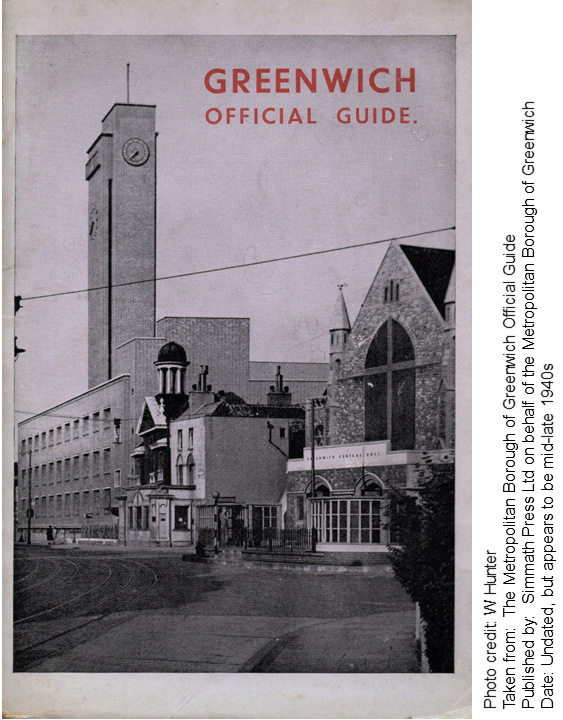
If confirmation were needed, Reichardt and Veenendaal offer us a quote from Clifford Culpin, the architect of the Greenwich commission: “I was a devoted admirer of Dudok. When I had to design the building in Greenwich, I travelled to Hilversum. And although this great man had a house full of guests, he set aside a long day to show me his best works”. [10]
As for Ronald Uren’s Hornsey town hall, the authors reference Dudok expert Paula van Dijk: “the work in Hornsey bears such a strong resemblance to Dudok’s Town Hall that Uren likely used a photograph of the Hilversum work. Even the lamps above the windows of the council chamber in Hilversum have been copied, albeit executed as slats, according to Van Dijk”. [11]
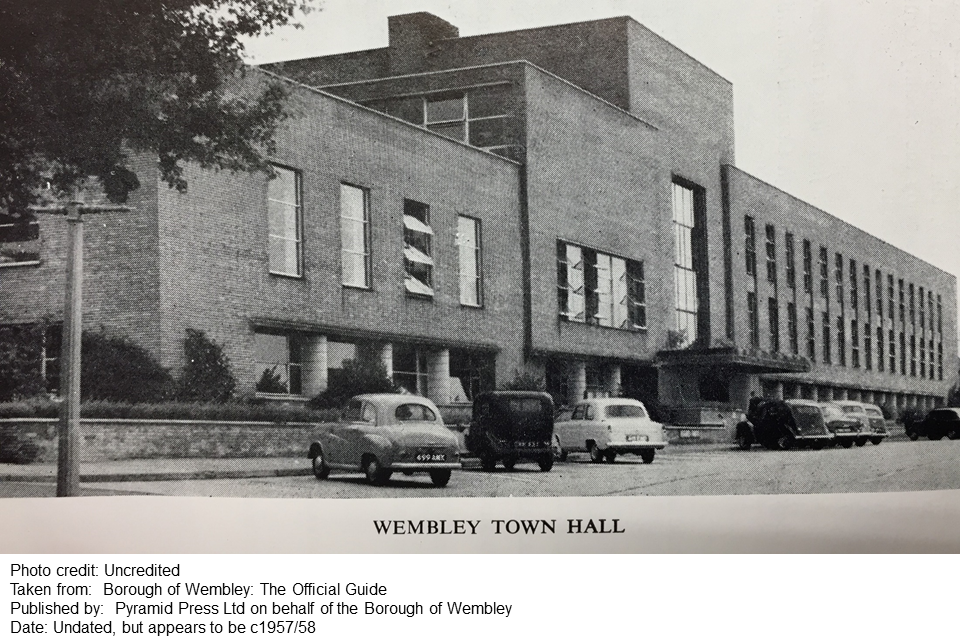
But, are there better examples? In his posthumously published Interwar, British Architecture 1919-39, Gavin Stamp invites us to consider Clifford Strange’s former Wembley (later Brent) town hall from 1940. It lacks a Hilversum-inspired campanile, but Stamp implies that if the bell towers were stripped away from Greenwich and Hornsey, then Wembley would be a better candidate for demonstrating Hilversum’s influence on a British interwar town hall design. [12]
Just to show that these things are never clear cut, Historic England’s own listing entry records the following in respect of Wembley town hall: “Recommended as a town hall in the Scandinavian style which is an example of simple but effective 1930s municipal planning, the interiors making much use of borrowed light and internal glazing. Pevsner called Wembley ‘the best of the modern town halls around London, neither fanciful nor drab’”.[13]
Scandinavian? Dutch? As a non-specialist, this is where I start to get confused, but Stamp provides a nice way of tying up the loose ends, noting that both Holland and Sweden were “Protestant constitutional monarchies, and hence more sympathetic to British visitors and countries in which a native tradition of building in brick had been invigorated by the Arts and Crafts movement”. [14] Perhaps the precise labels are less important than the general point that there was a relationship between the modern designs emanating from the Netherlands and Scandinavia and that the UK was receptive because its own Arts and Crafts tradition had informed these European developments. Hilversum, Greenwich, Hornsey and Wembley share a connection of varying intensity.
To conclude… Sometimes things you have built up in your mind disappoint in reality. I was lucky – Hilversum town hall exceeded my expectations in all respects. It is beautiful, dignified and, oddly, moving. It also provided a memorable family day – a shared experience still talked about (especially that trip to the top of the tower). If you get the chance to see it – and I assume you have an interest if you have read this far – I would urge you to go.
Notes
[1] Last Train to Hilversum, A Journey in Search of the Magic of Radio, Charlie Connelly, Bloomsbury, 2019, page 300
[2] Ibid. page 300
[3] Town Hall, Hilversum, W.M. Dudok (Landmarks in Architecture), Herman van Bergeijk and Paul Meurs, V+K Publishing/Inmerc
[4] Dudok, Annette Koenders and Arie Den Dikken, W Books, 2nd updated edition 2020, page 93
[5] The “luxuriant garden” would see Dudok work closely with Jan Hendrik Meijer, who headed up Hilversum’s parks division.
[6] Town Hall, van Bergeijk and Meurs, pages 21, 22
[7] Ibid. page 35
[8] Ibid. page 43
[9] Inspired by Dudok, Joke Reichardt and Peter Veenendaal, dudok.org, 2024
[10] Ibid. page 91
[11] Ibid. page 89
[12] Interwar, British Architecture 1919-39, Gavin Stamp, Profile Books Ltd, 2024, pages 138-139
[13] Historic England, Brent Town Hall List Entry https://historicengland.org.uk/listing/the-list/list-entry/1262141?section=official-list-entry
[14] Interwar, Stamp, page 131

 LCCmunicipal